Sport performance in Higher education
What is it?
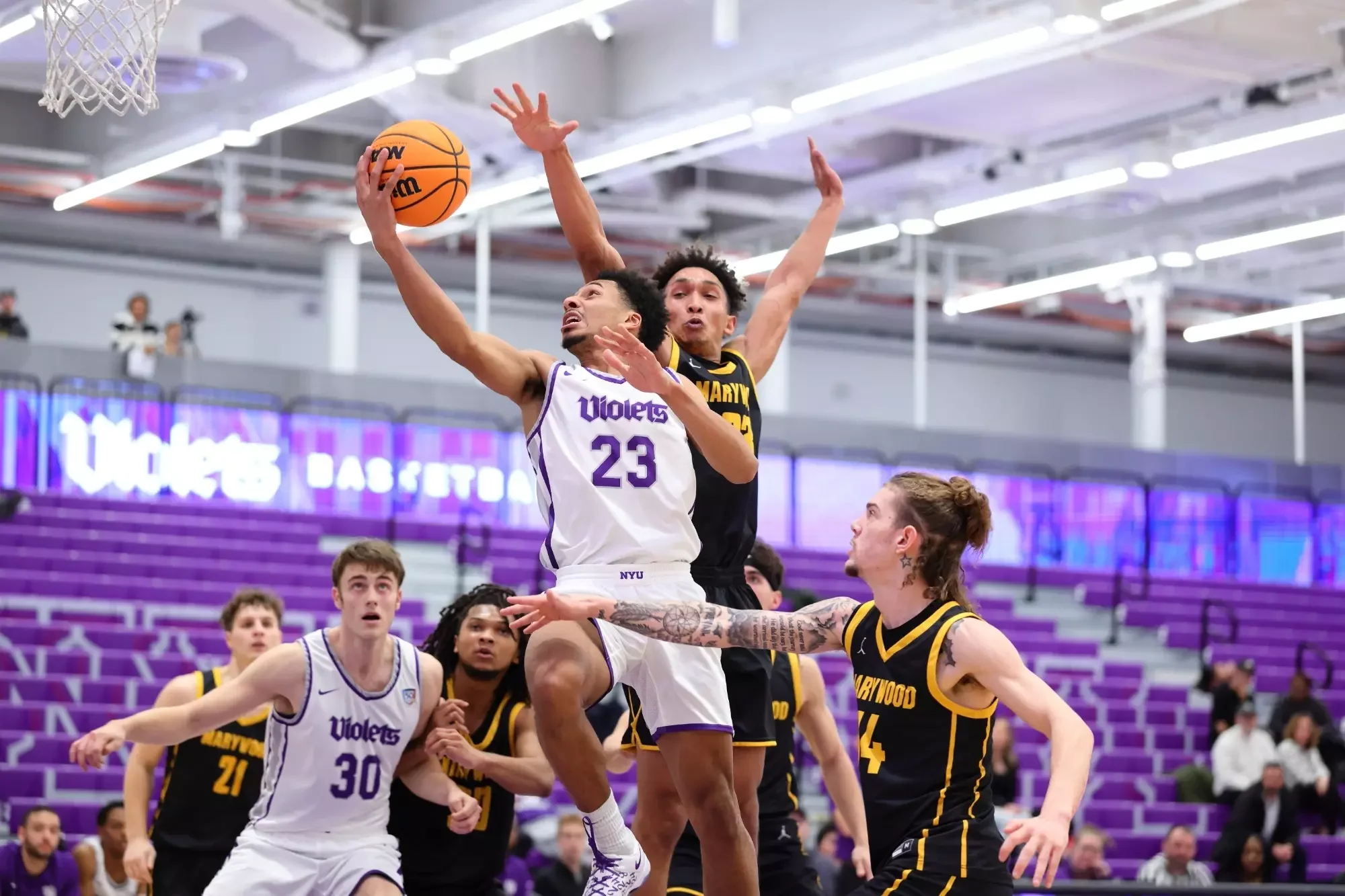
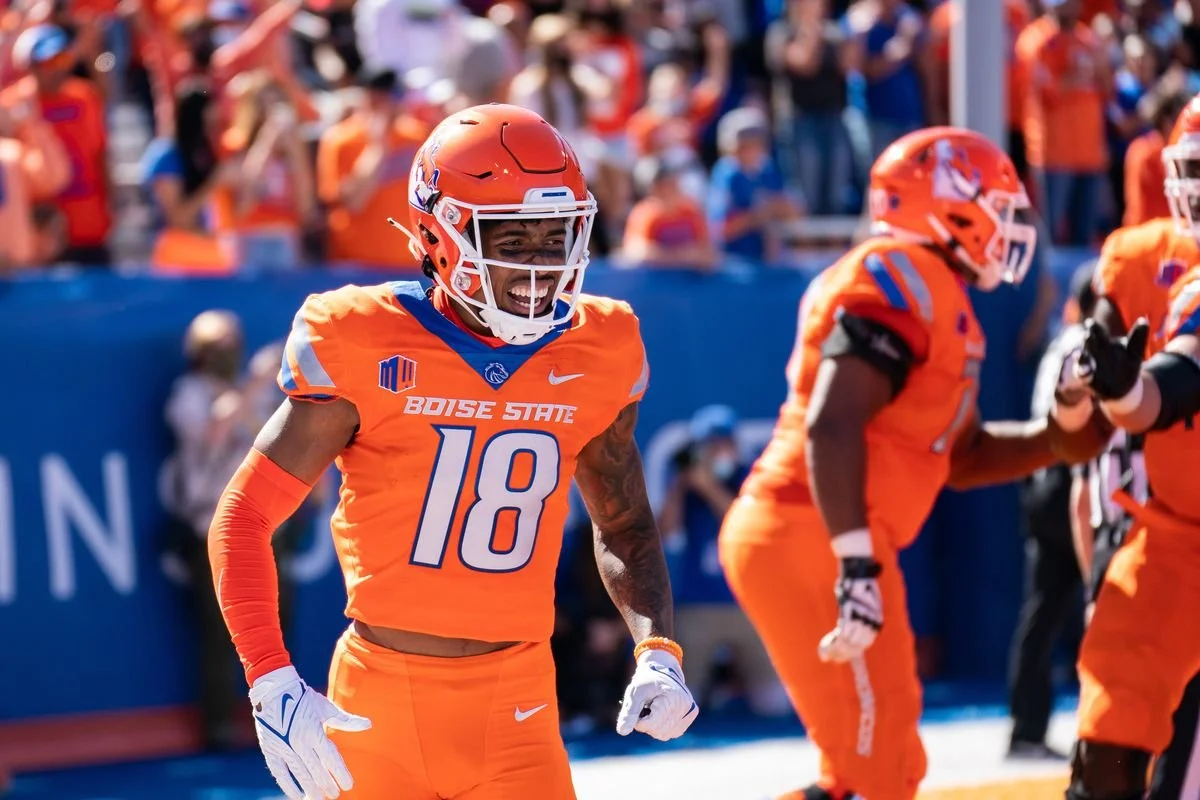
A Sport Performance major is an interdisciplinary program that formally recognizes the educational value of a student-athlete’s competitive athletic experiences--in practice, competitions, strength and conditioning, and travel--as a performative component of a curriculum that is integrated with sport-related coursework in disciplines such as biomechanics, physiology, psychology, philosophy, sociology, history, data analytics, and leadership.
By combining performance with classroom study, a Sport Performance Major is analogous to performing arts majors such as dance, music and theatre.
Your Questions, Answered
-
The Bachelor of Arts (BA) in Sport Performance is an interdisciplinary degree that recognizes competitive sport as an embodied, experiential form of academic learning. Athletic participation—in practice, competition, strength and conditioning, and structured training environments—constitutes the performative core of a curriculum intentionally integrated with coursework across the human sciences, social sciences, humanities, and applied leadership fields.
Through structured reflection, integrative coursework, and theory-to-practice application, students transform athletic experience into intellectual inquiry and personal development.
By formally combining performance with academic study, the Sport Performance major parallels other performance-based disciplines such as dance, theatre, and music, while honoring the distinct ways that sport cultivates expertise, identity development, resilience, ethical reasoning, teamwork, and human growth.
This major is not a sports business or coaching major, nor a rebrand of exercise science or sport management. Rather, it is a performance-centered, human development degree grounded in interdisciplinary study and the academic legitimacy of sport.
-
Students must participate in a sport environment that includes:
Regular, structured training
Qualified coaching or supervision
A sanctioned or institutionally recognized competition schedule
Eligible pathways may include:
Varsity athletics (intercollegiate)
Junior varsity or developmental squads
Professional or semi-professional sport
Olympic/Paralympic development programs
Club sports with equivalent rigor and structure
Recognized elite training academies or federations
-
The major curriculum should be organized into five curricular pillars:
1. Embodied Performance & Practice
In-season performance courses, applied practice, performance labs, integrative learning experiences. Institutions should require a minimum of two seasons of competitive participation (or equivalent documented experiential practice) to complete the major.
2. Human Performance Sciences
Exercise science foundations such as physiology, nutrition, motor learning, movement science
3. Mind & Behavior
Psychology, mental skills training, identity development, expertise development
4. Culture, Ethics & Meaning
Philosophy, sociology, ethics, history of sport, cultural foundations of human performance
5. Leadership, Communication & Applied Practice
Leadership theory, group dynamics, communication, teamwork, applied performance support
-
1. Maintain Flexibility
The major should adapt to institution size, sport culture, staffing, and student needs.
2. Keep Requirements Broad, Not Bureaucratic
Avoid over-specific references to NCAA, NAIA, or external governing structures.
3. Center Embodied Learning
Sport performance must remain the core—analogous to recitals in music or productions in theatre.
4. Honor the Interdisciplinary Nature of Performance
Sport is simultaneously physical, cognitive, emotional, social, ethical, cultural, and artistic.
-
Designate as an applied SPER course to distinguish it from typical activity or participation course.
3 credits for each applied course, with students completing possibly up to 4 courses for a maximum of 12 credits in the major.
Applied courses can be repeatable or distinct.
Depending on the learning outcomes, an applied course may be taken in season or out of season.
Each course is designed to extract, document, and assess performance learning developed through sport.
-
Model 1: Coach-led
Course description
This course is composed of the activities required to play an NCAA sport and integrates sport practice, competition, and evidence-based performance science to deepen students’ understanding of themselves as developing performers and learners. The course equips students to become adaptable, self-regulated performers capable of applying knowledge across contexts and thriving in dynamic, high-pressure environments. Only students who are officially on the NCAA roster can enroll in the course. The course is pass/no pass and can be repeated up to four times.
The head coach or designee will:
Be the instructor of record
Determine player and team goals translated into Objectives & Outcomes
Conduct simple and written pre and post-season player assessments to make expectations clear
Give regular oral feedback on the outcomes during the season
Submit a pass / no pass grade at the end of the season
Players will
Submit a self-reflection (in writing, a video) on their performance during the season
Here is an example of a player assessment for women’s basketball:
Scale 3 = exceeds expectations; 2 = meets expectations; 1 = does not meet expectations
Objective & Outcomes
Pre-Season
Post-Season
Comments
Offense
Understanding offensive sets
Using screens
Passing
Rebounding
Avoiding turnovers
Shot selection
Getting back on defense
Defense
Communication
On-ball containment
Close outs
Managing screens
Help defense
Rebounding
Transition to offense
Other
Effort
Attitude
Listening
Playing one’s role
Leadership
Emotional self-control
Respect for teammates
Compliance with team rules
Coaches who go through a hiring process are presumed qualified to evaluate students on the quality of the above performance skills, attitudes, and emotional and social intelligences.
Programs can develop a syllabus template for the sport participation courses in a program that is modified for each sport.
Model 2: Faculty-Led, Coach-Supported
Course Description
This course integrates sport practice, competition, and evidence-based performance science to deepen students’ understanding of themselves as developing performers and learners. Through structured reflection, guided discussion, and applied learning activities, students analyze how their athletic experiences intersect with academic concepts such as identity development, resilience, decision-making, communication, and expertise formation. Students build an Integrative Performance & Learning Plan connecting sport, academic, and career goals. The course equips students to become adaptable, self-regulated performers capable of applying knowledge across contexts and thriving in dynamic, high-pressure environments.
Coaches may contribute to:
Providing training documentation
Verifying participation
Supplying contextual insight
Offering non-graded feedback
Instructor Qualifications
Master’s degree in sport performance, exercise science, coaching, psychology, leadership, or related field
OR significant professional expertise vetted through institutional hiring practices
Division of Responsibilities
Faculty:
Create syllabus
Define learning outcomes
Design assessments
Assign final grades
Maintain academic integrity
Coaches:
Verify hours/engagement
Provide observational context
Offer mentorship
Supply technical insight (non-graded)
-
At many institutions, coaches already give Pass/No Pass grades in the intercollegiate sport activity courses, and there have not been any conflict of interest problems. Moreover, it would seem to be exceptional for athletes to earn less than a ‘C-’ to pass the intercollegiate sport activity course given that they would presumably be attending practices regularly, have many reasons to apply themselves in practices, and already have a high level of skill.
-
Yes, there is demand for the kinds of skills that a Sport Performance major develops. Employers value the work ethic, teamwork, and resilience developed through sport (Chalfin et al., 2015; Zhou & Kaplanidou, 2018). As Chafin et al noted, “companies that seek athletes to fill positions within their organizations do so because they pair athletic participation with dispositional attributes highly valued within their organizations including a competitive nature, goal-orientation, ability to handle pressure, strong work ethic, confidence, coachability, ability to work with others, self-motivation, mental toughness, and time management skills” (Chalfin et al., 2015). Other research shows that former collegiate athletes excel in leadership, management, law, medicine, and business—and are overrepresented in C-suite roles (Bonfiglio et al., 2018; Amornsiripanitch et al., 2023).
At least one institution has surveyed its students on the desirability of a Sport Performance major. In fall 2020, University of the Pacific conducted a survey of its NCAA athletes and three of its Club Sport teams to determine the potential level of interest for this major. 155 out of 342 students responded (294 NCAA and 48 Club Sport student-athletes), a significant response rate of 45%. Out of the 155 student respondents, 61 either ‘strongly agreed’ or ‘agreed’ that they would have majored in Sport Performance, which was 40% of the respondents. 25% were neutral, and 35% either disagreed or strongly disagreed about majoring in Sport Performance.
-
A Sport Performance major supports careers in the following areas:
Professional athlete
High-performance coaching & training
Performance psychology & mental skills training
Sport strategy, data science & analytics
NIL representation & athlete branding
Health & wellness leadership
Education, public policy, or nonprofit work
Human performance coordinator (military/medicine/first responders)
Innovation consultant (wearable tech, sport startups, performance labs)
Corporate sales, training, management, leadership development
Executive or leadership coaching
Graduate/professional school (e.g., M.D., J.D., MBA, Ph.D.)
-
Yes, this is a risk that other majors do not have; however, the incidence of injury preventing an athlete from competing for three years is low, and exceptions can be made to the three-year requirement for injuries. Injured players do continue to attend practices and team activities, so there is the opportunity for continuing learning about sport performance.
-
Yes. It is designed with flexibility in mind, making it ideal for transfer students seeking to align academic goals with athletic performance and experience. By requiring only two seasons of athletic participation, the program accommodates students who are transitioning between institutions. Its broad, integrative curriculum allows students to apply their sport participation and prior coursework across disciplines, streamlining the path to graduation.
-
This is true, and it is a trade-off with the major. It is still the case that most of an athlete’s courses will be outside of their major. However, there are also benefits. Perhaps the principal one is that intercollegiate athletics now becomes an activity that is not merely ‘extracurricular,’ or even peripheral, to the academic mission of a university but formally contributes to an academic major. There is also the opportunity for coaches and faculty to integrate better since they both contribute to an academic program.
-
Capstone Definition:
A culminating integrative project linking embodied performance, theory, and reflection—demonstrating growth as both a performer and scholar.Possible formats:
Research paper
Applied performance analysis
Portfolio + oral defense
Interdisciplinary project
Performance-based inquiry with reflective documentation
Capstone draws upon all five curricular pillars.